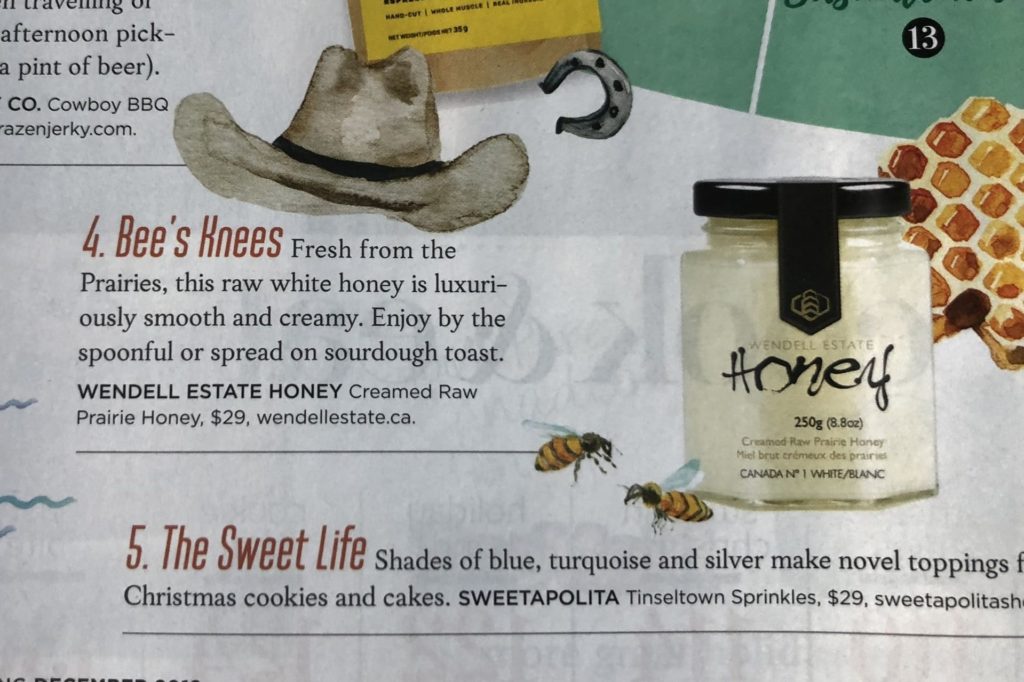
Try our honey. Just one taste is all it takes. There’s a reason chefs and honey aficionados rave about our honey. Our passion for honey perfection has earned Wendell Estate Honey several prestigious honey awards and media attention.
We know of no other brand that commits the effort and resources to getting their honey to the store and to the customer in the freshest, healthiest and most natural state possible like we do. If you’ve tasted our honey you’ll probably understand the difference this makes. If you purchase a jar of Wendell Estate Honey that is less than perfectly fresh and raw, please contact us at info@wendellestate.ca,ย 1-844-201-2829 (toll free) or (204) 564-2599 with proof of purchase and pictures of honey including the bottom of the jar within 2 weeks of purchase (before finishing the jar) and we’ll ensure that you get a jar of fresh honey.
Raw honey has a wide range of health benefits. In fact raw honey has almost the opposite effects of processed sugars’ health harms, including promoting weight loss in active individuals, decreasing the risk of developing diabetes, metabolic syndrome, and high blood pressure, all of which result in a lower risk of heart attacks and other health complications. Raw honey is good for sleep and for digestion. It protects from stomach ulcers and accelerates their healing. Raw honey has anti-oxidant, anti-inflammatory, anti-bacterial, anti-viral, and anti-fungal properties. However, raw honey’s health benefits are diminished rapidly by heating or pasteurizing the honey, or more gradually by aging at room temperature.
Many people don’t realize that if you’re eating the honey, any pure raw honey has comparable health benefits to manuka honey.ย Manuka honey’s specialty is its suitability for making heat sterilized medical grade wound dressings and the MGO and UMF numbers on manuka honey reflect this special property pertaining to wound dressings: They do not indicate health benefits beyond that. There’s no evidence MGO or UMF are relevant if you’re eating the honey rather than making wound dressings.
We don’t claim that our honey has any unique health benefits. However, it certainly does have comparable health benefits to any other pure raw honey (and it’s at least as pure, raw and natural as any honey out there). What Wendell Estate customers love about our honey is its uniquely fresh flavor, unparalleled silky texture and enticing floral aromas.
Our honey is a luxurious sweet treat that’s also good for you.
We practice clean, sustainable beekeeping. We know there’s no pesticides, no antibiotics and no sugar syrups in our honey. Honey packagers cannot make this claim with the same degree of confidence no matter how much they claim they test the honey that they purchase in bulk from 3rd party producers. Frequent independent laboratory tests that always confirm that our honey is exactly what it says it is: pure, natural raw honey and nothing else. Wendell Estate Honey is the first Canadian honey to receive Genuhoneyโsยฎ rigorous certificate of authenticity.
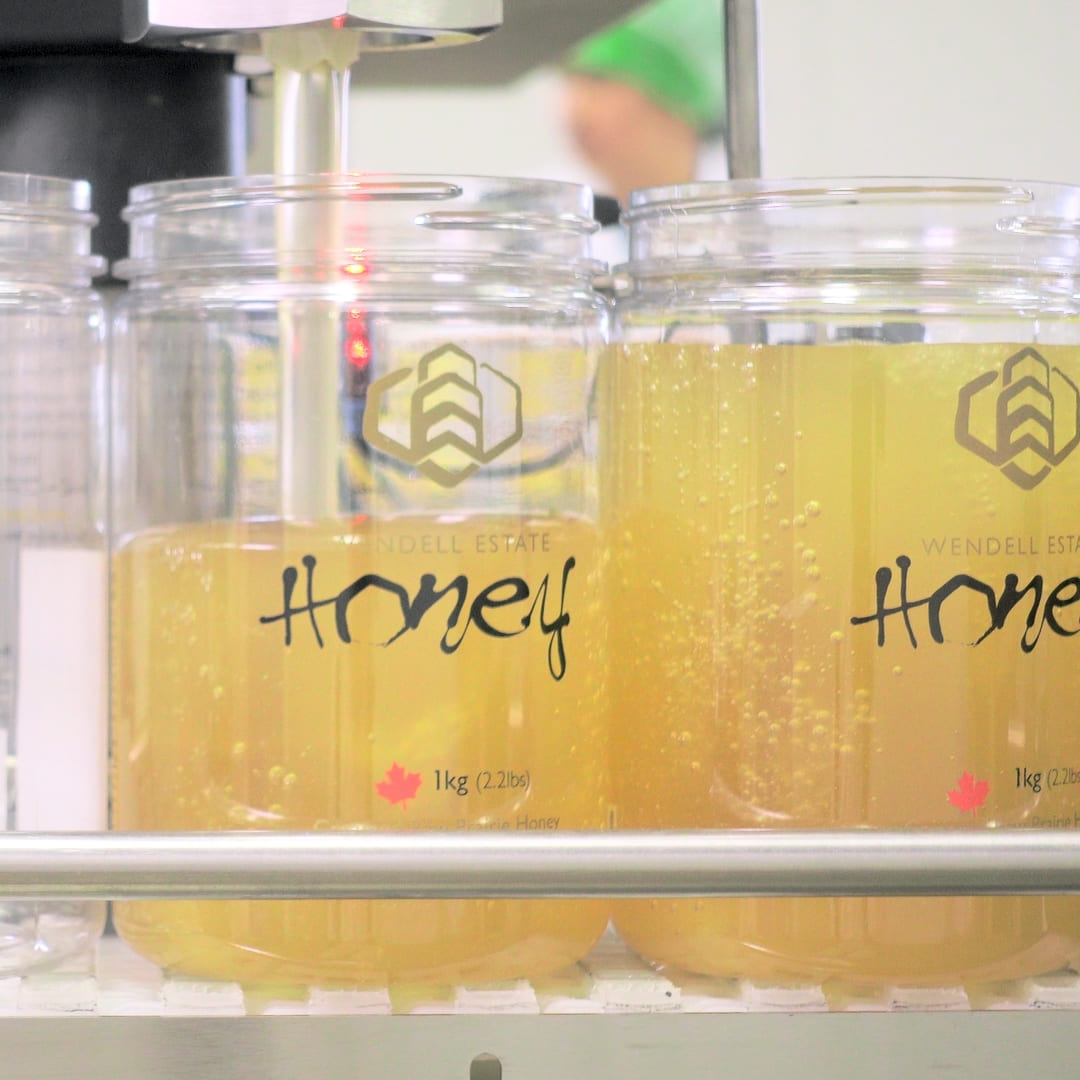
Because we package Wendell Estate Honey directly as we extract it from the honey combs, it never sits in a bulk drum and there is no need to heat it to get it from the drum to the retail jar. Even many brands labeled “raw” are heated for packaging. Heating raw honey decreases health benefits and changes the flavor by destroying some of the bee enzymes, and natural flavonoids and polyphenols that make raw honey such a complex, healthy and unique food. Wendell Estate Honey is likely the freshest raw honey you’ll find outside a beehive.
Every drop of Wendel Estate Honey comes from our own beehives. We not only know the complete history of the honey, but also the bees that produced it. Tim selects our finest honey, day-by-day as the honey is harvested, to be packaged directly into Wendell Estate jars, without blending or filtering. (We do strain out larger pieces of wax).
Our passion for honey perfection has won us some prestigious international awards.
Links to unpaid articles in respected media that you can read for yourself
Tim (John Wendell’s son) and his wife, Isabel, took over Wendell Honey farm in 1974. For decades, loyal customers would visit our farm during harvest season to stock up on fresh raw honey. In 2011 (when raw, unprocessed honey was rare on supermarket shelves), Tim and Isabel had the idea to launch Wendell Estate Honey so that people without direct access to a beekeeper might enjoy the joys and health benefits of the finest raw honey direct from our farm.
Tim’s sons Nathan and Jeremy have returned from careers abroad to join the farm and Wendell Estate Honey. The farm has grown over the years, with several experienced beekeepers becoming managing partners. Tim (getting up there in years at nearly 80) still spends nearly every day from roughly early March through June in the bee yards checking his beloved bees and supervising the beekeeping team. During July and August he coordinates the harvest from the extraction and packaging facilities on our farm, choosing our finest honey (by honey quality parameters, floral source, flavour and texture) to be packaged into our Wendell Estate Honey jars, while personally supervising that process.
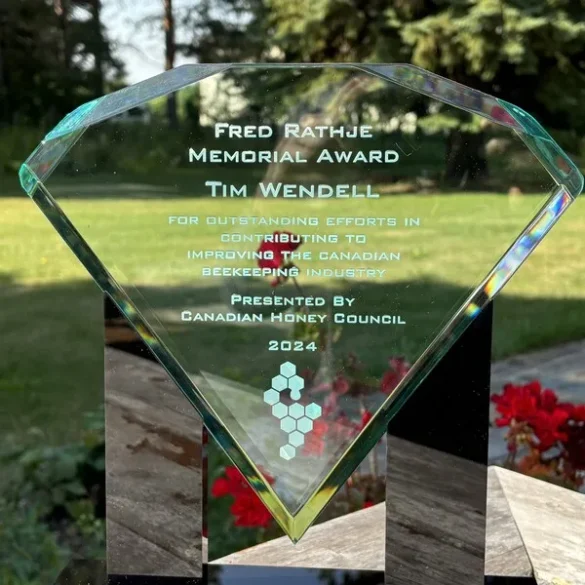
In 2024 Tim was awarded a lifetime achievement award by the Canadian Honey Council for his ongoing efforts to improve beekeeping in Canada.
Soft-set honey refers to honey that has crystallized (also termed “granulated”). Other terms used are “creamed honey” and “whipped honey”. Because our honey is technically not “creamed” which usually refers to the process of adding “seed honey” to control crystallization, nor is our honey mechanically whipped or ground, we prefer to call it “soft-set honey”.
All natural honey starts out as a liquid. Most raw honeys will naturally crystallize over time. The rate that honeys crystallize depends mostly on the floral source and the temperature, as well as other factors. Some raw honeys remain liquid for many months at room temperature, while others, like most honey from the prairies in Canada and Northern USA, tend crystallize quite rapidly. For this reason, Northern prairie honey is often crystallized (creamed or whipped) before it is sold to ensure that the crystallized honey is relatively smooth and soft.
When we package Wendell Estate Honey, we choose our finest honey that will crystallize smoothly in the jar naturally. This requires packaging it fresh and controlling the storage conditions over several weeks.
The first reason is that soft-set raw honey generally lightens in color as it crystallizes. Our honey is a light amber color when we extract and package it. However, even then, it is a very light color compared to other honeys. In the industry the color is referred to as “white” or “water white” (the lightest official color designation for honey).
Different honeys from different floral sources have a wide range of natural colors. We prefer the subtle, delicate flavors that tend to prevail in light-colored honeys, so that’s the honey we choose to package in our retail jars.
Importantly we don’t add anything or do anything to make our honey whiter: the color is entirely natural. There are factors that tend to cause any honey to darken, regardless of its initial natural color. Two important ones are ageing and heating, both of which diminish the flavor and the health benefits of natural raw honey. The exceptionally white color of our honey is a testament to its freshness and the care we take in preserving the natural whiteness.
This is soft-set honey that has been allowed to crystallize before we sell it (see above “what is soft-set honey?”).
We think you will enjoy the signature silky smooth texture of our soft-set honey. It’s softest and most spread-able if kept at temperatures around 75 to 80°F (23 to 27°C). If you find your honey is too hard, you can gently warm in in a water bath of ~85°F, or keep it in a warmer place in your kitchen.
You can melt it into a liquid by gently warming it to about 95°F, but please be aware that when it cools and re-crystallizes the honey will lose it’s original soft smoothness. You can easily re-warm it until it becomes liquid again.
An excellent question! True mono-floral honey is quite rare and labels are often not accurate. On the Canadian prairies, our summers are short, but intense, with many kinds of flowers blossoming simultaneously. Honeybees forage nectar from any flowers available, up to 3 miles (5 km) distance or more. Most honey from the Canadian prairies comes from multiple floral sources.
We choose the honey to package into Wendell Estate jars based on flavor and honey quality parameters. This means any jar of Wendell Estate Honey will contain honey from flowers like alfalfa, clover, canola, sometimes borage, and any other wild or cultivated nectar-producing flowers that are blossoming near the bees at the time.
Traditionally, brands of honey found on supermarket shelves tend to be sourced from many different honey producers, blended together to arrive at a uniform, mid-grade product. Then the honey is often further processed by ultrafiltration and pasteurization to extend shelf life and prevent crystallization.
However, heating the honey to pasteurize it diminishes both the flavors and the health benefits of natural honey. Ultrafiltration removes the bee pollen naturally found in honey and also makes it more difficult to detect the floral and geographic source of the honey and possible adulteration with cheaper sugar syrups.
Raw honey is honey in its natural state. “Raw” implies the honey has not been heated beyond 104°F (the maximum temperature inside a healthy beehive). “Raw” also means that the natural bee pollens, and possibly bee propolis have not been removed from the honey.
The advantages of raw honey include a more complex flavor profile and un-diminished health benefits. Honey sold raw is usually a premium variety of honey, while blended processed honeys usually mix inferior, cheaper honeys with higher-quality honey to achieve a mid-grade product.
Yes! Pasteurization of processed honeys is done to increase shelf life and does not increase the safety of honey in any way. The world-renown Mayo Clinic has this to say about the safety of raw honey: “‘Pasteurization’ of honey actually has no technical meaning, and heating honey doesnât provide any food safety advantage. Producers may heat honey to keep it from crystalizing but there is nothing safer about honey calling itself ‘pasteurized’ honey versus ‘raw’ honey…Foodborne pathogens actually do not survive in honey, so there is no additional risk in consuming it raw. Yeast can survive and grow in honey, but this fermentation will turn honey into mead, and a consumer would know this easily with visual inspection.”
Natural honey is remarkably safe to eat and never spoils in a way that can cause harm if eaten. If you can eat pasteurized honey, you can eat raw honey.
Infants below the age of one year should not eat any honey (pasteurized or raw). There is a small, but real chance that Clostridium botulinum spores occasionally found in honey could cause infant botulism when eaten by infants whose intestines have not yet been colonized fully by healthy bacteria. People older than one year of age are fully protected from this rare condition and cannot get infant botulism from eating honey.
Â
In North America, organic certification for honey is especially complex and legitimate USDA (or Canadian Organic Regime) certified organic honey is extremely rare. Major requirements for organic certification of honey lie outside the control of the beekeeper and depend on land management of all the land within 1.8 miles (3km) of the beehives. Choosing organic honey to influence more sustainable agricultural practices is unfortunately much less effective than it is for other food products where the producer has full control over factors that contribute to organic certification. Virtually all USDA organic and much COR organic honey is imported rather inexpensively from countries like Mexico, India and Brazil. This article goes into more detail on the complexities of USDA-certified organic honey. All that being said, Wendell Estate Honey is at least as clean and free from pesticides, antibiotics, heavy metals and sugar syrups as the imported organic honeys. This is continually verified by independent laboratory testing and our honey awards (which test the honey rigorously).
We know this because we’ve been in producing and selling bulk honey all our lives (and still sell most of our honey in bulk to packaging brands – only our finest goes into the Wendell Estate Honey jars).
Beekeepers package their honey into bulk drums. These drums sit around at ambient storage, with the honey gradually deteriorating in freshness, flavor and health benefits, until it is sold to a packing company.
The packing company almost always has to heat the honey to get it from the bulk drum to the retail package. Before it’s packaged, the honey is usually blended, combining high-quality honey (like ours) with cheaper, lower-quality honey to arrive at a uniform mid-grade product.
From this step there are two options:
As someone who loves honey in all its diversity and character, Sarah Wyndham Lewis has this to say about those pasteurized, blended and processed supermarket brand honeys: โWhat Iโm asking people to do is to cross tasteย [unblended, natural] incredible honeys with supermarket honey and try and understand that supermarket honey isnโt honeyโฆitโs a blend, and anything that says โblendโ you just donโt touch: you put it straight down back on the shelf. Thereโs no reason to blend honey, ever. [Supermarket honey] is an anonymized global product thatโs been very highly processedโฆSupermarket honey has taste, while real honey has flavours. We want to make people into honey snobs.โ
We couldnโt agree more.
When you purchase honey directly from the producer, it is likely going to be raw, unblended honey with all the complex flavors imparted by the blossoms, the weather, the soil and the bees. Like Master Chef Michael Allemeier says, “The shorter the journey from the producer to the plate, is always going to be the best-tasting product.โ
Any time you have the chance to try raw, unprocessed honey from a beekeeper we urge you to take it. The variety of bouquets and flavors among raw honeys offers a nearly infinite variety of gustatory pleasures.
One cautionary note from a reluctant, de-facto marketer (among other responsibilities, I manage the very limited marketing for Wendell Estate Honey): among the thousands of honest beekeepers that sell their own real raw honey in jars or pails, from their farm, or at farmers’ markets, or in local independent grocers, there are also honey packaging/marketing companies that market their honey as if they are beekeepers, using phrases like “our bees”. Some even copying paragraphs directly from us (and likely other beekeepers) for their marketing materials. Others talk about “saving the bees” and “supporting our beekeepers” when all they’re doing is buying bulk commodity honey on the market, blending it, packaging it, and doing some heavy marketing. This is not to say that many packaging companies don’t offer fine honey, but if getting genuine honey directly from the beekeeper is important to you, please be aware of these marketing tactics by some packaging companies. You can most reliably find single-farm honey from a local beekeeper or farmers’ market, often at excellent prices. We always encourage people to try honey from different beekeepers and different floral sources – you’re bound to have some pleasantly delicious experiences.
Though we’re not your local beekeeper, we hope to be the next best thing. You can reach the beekeepers involved in making Wendell Estate Honey at info@wendellestate.ca, follow our facebook page, or our youtube channel, or Instagram feed (we’re not quite as active here) to see the people and the process behind our (and hopefully now your) honey. We always welcome any comments or questions: you’ll get real answers from real beekeepers.
The World Beekeeping Awards, held every 2 years in conjunction with the World Beekeeping Congress are the industry’s most prestigious competitive awards.
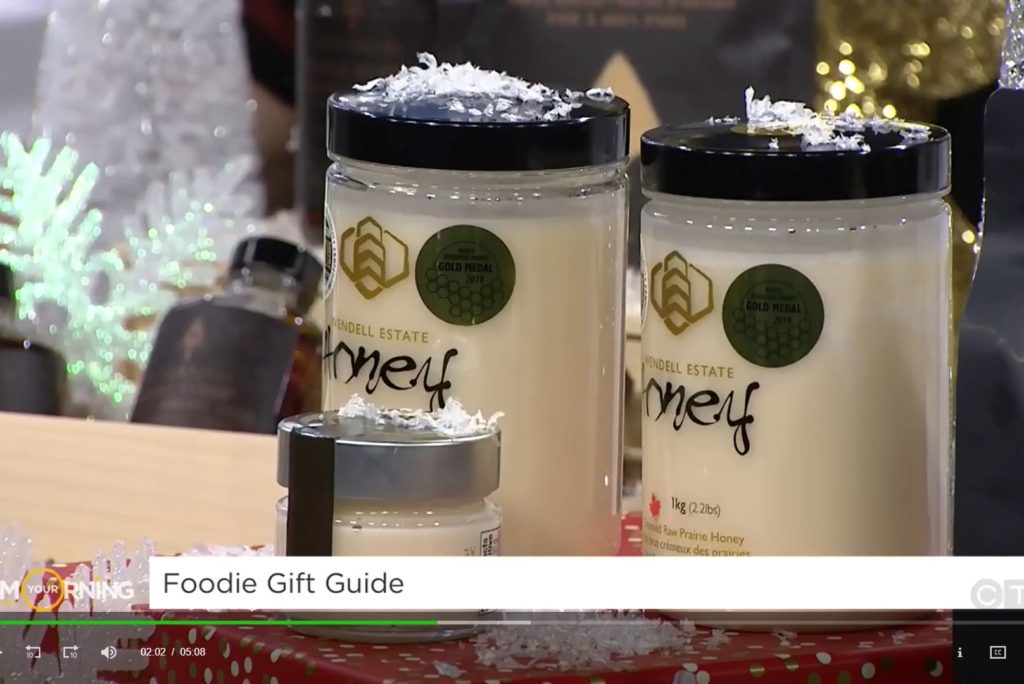
In 2019, Wendell Estate Honey won the Gold Medal in our category of Soft Set Honey.
We are proud to be recognized by honey experts as the world’s best-quality soft set honey.
In 2020 Wendell Estate Honey was awarded Platinum, the highest award for honeys with a total score of more than 95 / 100 possible points.
Wendell Estate Honey became the the first brand of honey from North American to recive this prestigious recognition.
The World Beekeeping Awards, held every 2 years in conjunction with the World Beekeeping Congress are the industry’s most prestigious competitive awards.
In 2023, Wendell Estate Honey won the Bronze Medal in our category of Soft Set Honey.
We are proud to be consistently recognized by honey experts as one of the world’s finest soft set honeys.
GenuHoneyยฎ uses forensic audits combined with the latest laboratory testing technology to verify that honey is both pure and authentic.
GenuHoneyยฎ allows consumers to trace their jar of honey back to the individual beekeepers who produced it.
Wendell Estate Honey is currently the only honey in Canada to receive GenuHoneyยฎ’s rigourous certification of authenticity
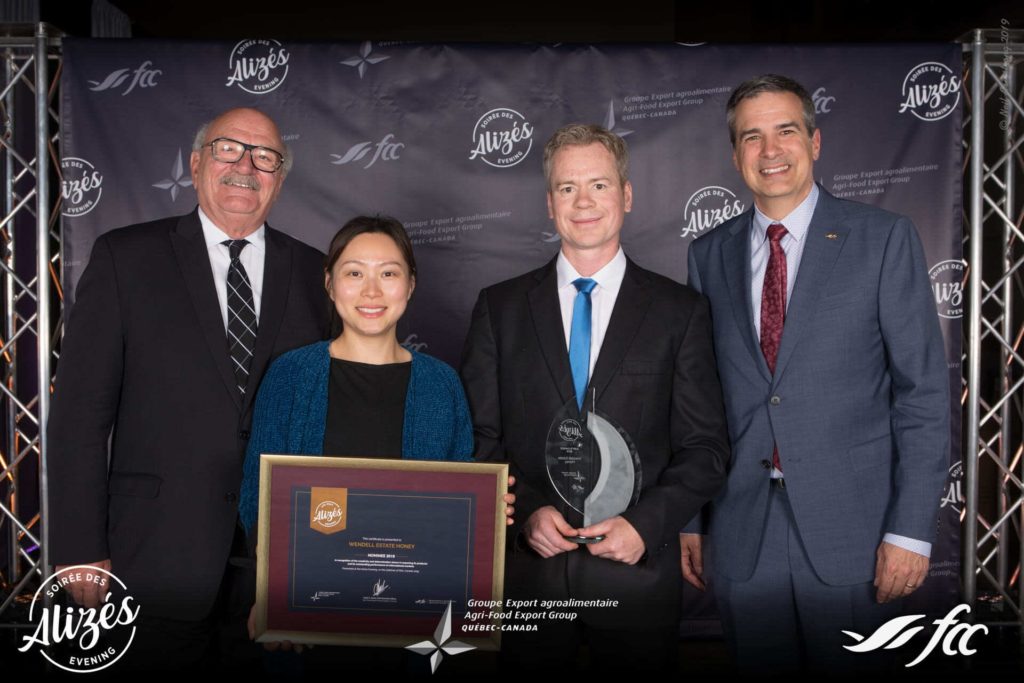
The Alizรฉs Awards (formerly Canadian Export Business of the Year Award) recognize excellence in agribusiness exporting and are awarded at the SIAL Canada Trade Show.
In 2019 Wendell Estate Honey won the Jury’s Choice Alizรฉ Award in recognition of our success in doing business abroad.
“By identifying an unoccupied market niche for their honey, Wendell Estate Honey Inc. has successfully established itself abroad while quickly adapting its strategies to the distinct needs and particularities of each region“, Andrรฉ A. Coutu, President and CEO of the Export Group
Wendell Honey is Registered with and Licensed by the Canadian Food Inspection Agency (CFIA).
CFIA undertakes regular inspections of Wendell Honey & Wendell Estate Honey facilities.
Procert certifies Wendell Estate Honey as an official Packager of Organic Honey according to Canadian Organic Regime (COR) standards.
Wendell Estate Organic Honey is sourced from friends of ours who are certified by Procert as Organic Honey Producers according to COR’s rigorous standards.
Wendell Estate Honey is certified Kosher by MK Pareve
Wendell Estate Honey is Halal. Certified by Halal Product Development Services (HPDS)
While this isn’t really a honey award, we’re posting it here because, as a beekeeper, this award is the nearest and dearest to WEH founder and owner, Tim’s heart.
From the award presentation speech given by Jake Berg, President of the Canadian Honey Council:
“Tim has been dedicated to improving the beekeeping industry. He has always graciously volunteered his time and efforts to serve beekeeping in Saskatchewan and beyond. Tim has always been generous, sharing ideas and experiences with other beekeepers.ย With his ample experiences and fearless willingness to try new things, he has vast amounts of knowledge to share.“
Wendell Estate Honey is grateful for the media coverage we’ve received ever since our successful debut on “Dragons’ Den” a national CBC TV broadcast. (Apologies that the episode published by CBC may not be available to those with USA IP addresses.)
It’s common practice for brands to post a series of media in their “as featured in” section. Usually this means that the brand has put out a paid press release using a press release service that gets their release onto those media websites (this is generally the case when links to the content on the media site don’t accompany the media site’s logo). This is different. These are unpaid, original media that you can click the link and read the story for yourself.
CTV Winnipeg’s “Morning Live” host Rachel Lagacรฉ interviews Tim about beekeeping and Wendell Estate Honey after Tim received the Fred Rathje Memorial Award